
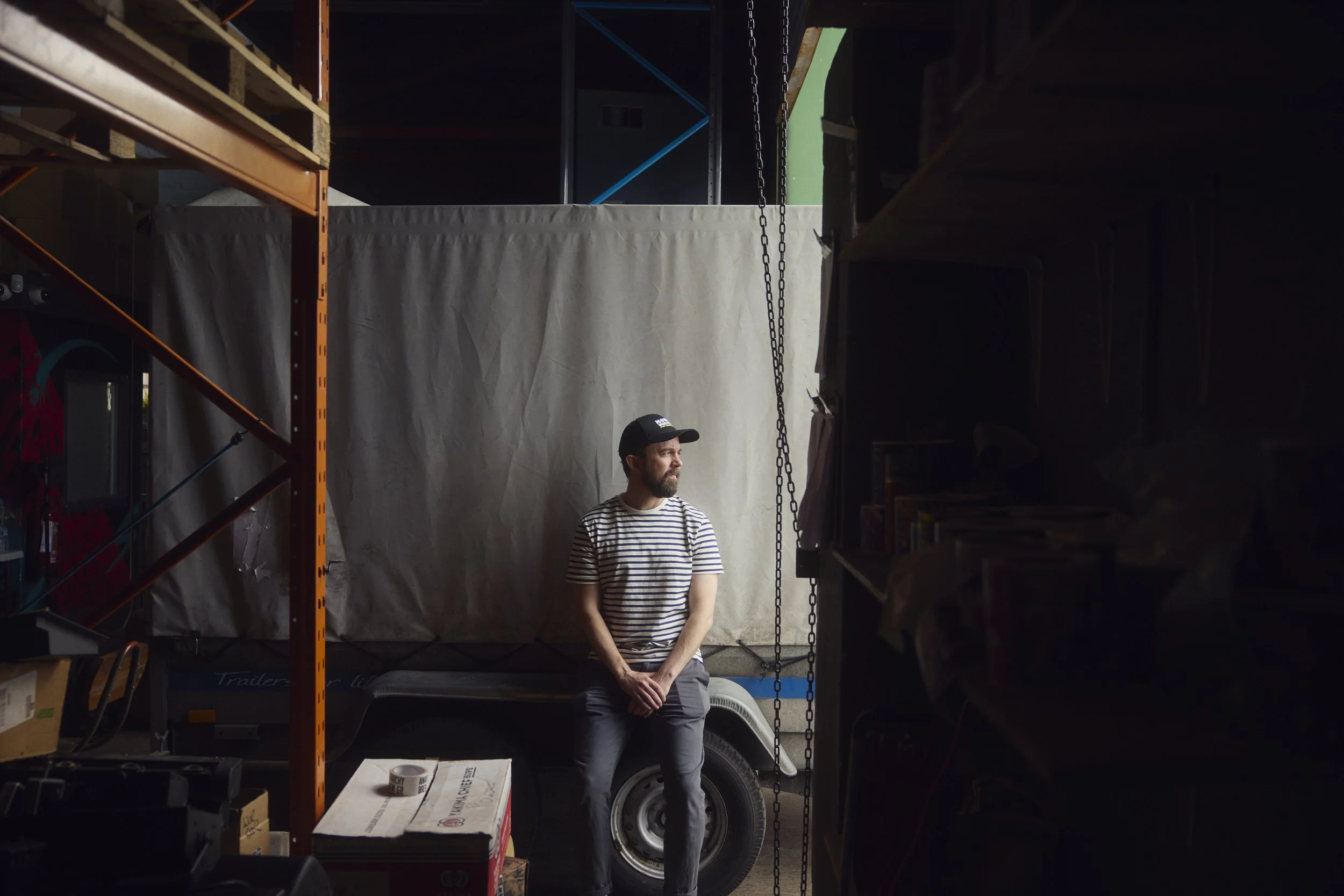
NICHE OF
A NICHE
North Wrestling
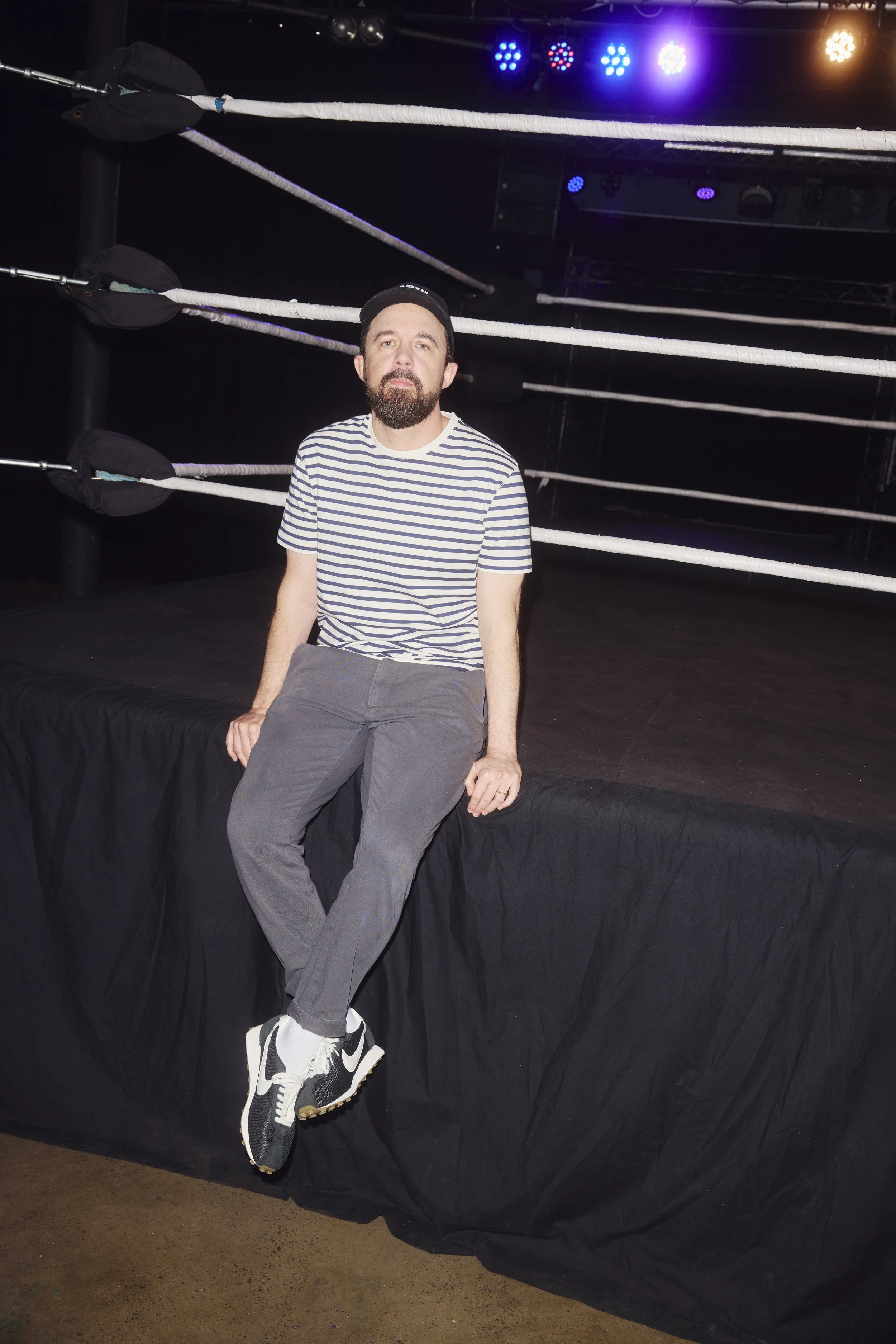
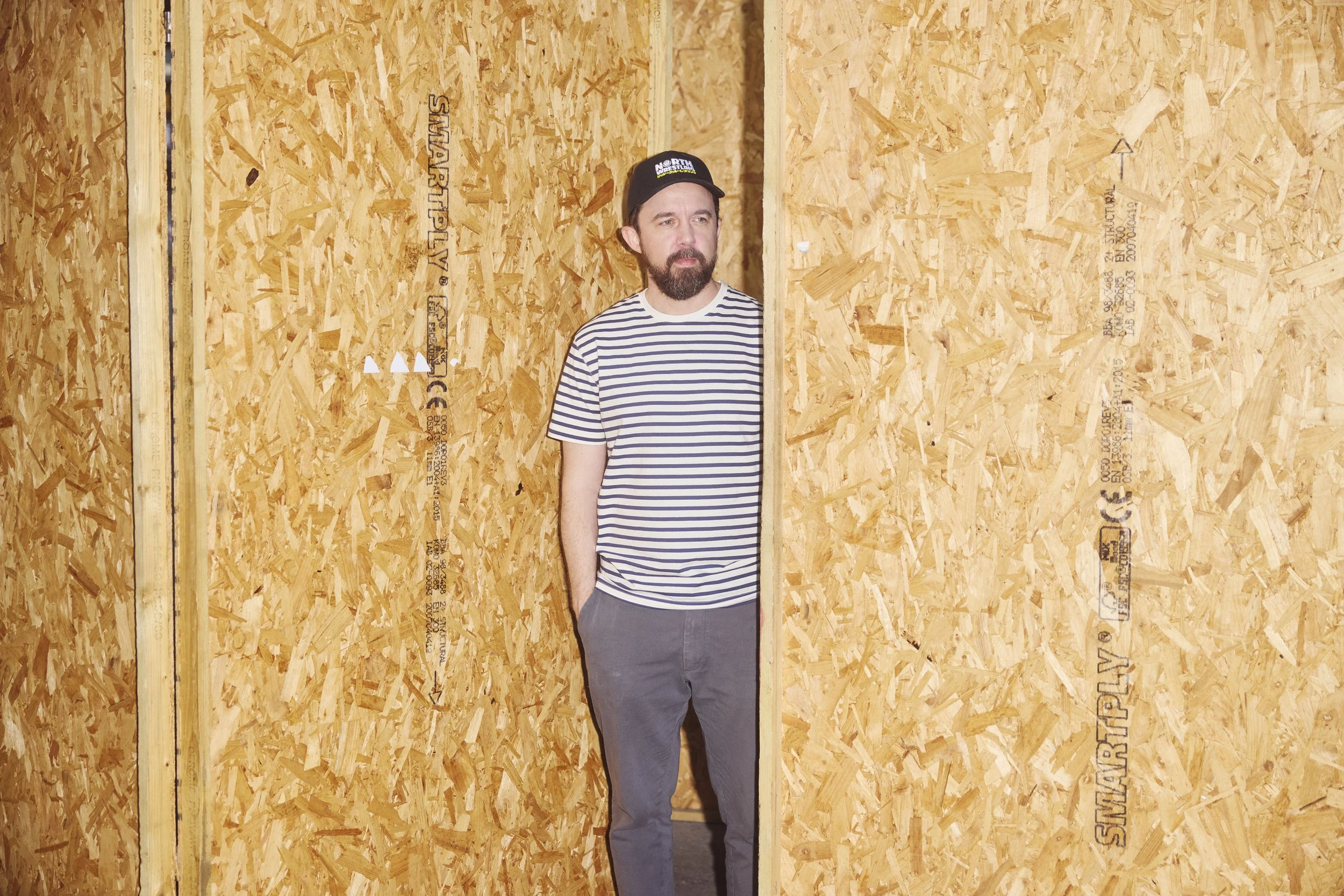
When Andrew Bowers reached a creative juncture back in 2016, he scribbled down "wrestling show" as a potential business idea. What started as a single night at the Riverside in Newcastle has since grown into NORTH Wrestling, an independent pro-wrestling promotion that just celebrated its 10th birthday. We sat down with Andrew, along with several of the wrestlers and creatives who make NORTH what it is, to talk about inclusivity, chaos, community, Dragon’s Den, and why pro wrestling deserves a second look.
Article by Ruby Guyler
Photographs by Christopher Owens
When I watched my first pro-wrestling show on TV earlier this year, I was incredulous. “I just don’t get it,” I said to my boyfriend. “It’s not real!” Five minutes later, I was hooked.
Like many people who weren’t exposed to wrestling shows growing up, I hadn’t the foggiest about this exuberant world of jaw-dropping athleticism, over-the-top acting, intricate storylines, and often questionable outfit choices. It may be fabricated, but the strength, agility and commitment to ‘the bit’ is very much real.
When we heard there was an independent pro-wrestling event in Newcastle, we snapped up tickets and (not without some misplaced trepidation) went to our first NORTH Wrestling show inside Anarchy Brew Co – which is indeed a brewery. About halfway through the final nail-biting match, I knew I wanted to interview NORTH’s founder for Pattern. People needed to hear about this.
About a month later, I sat down with Andrew Bowers inside Anarchy Brew Co to chat to him about NORTH Wrestling. People bustled around the venue carrying various bits of staging, lighting equipment and cameras, preparing for the show that evening. I started by asking Andrew the obvious: What compelled him to start a wrestling show in Newcastle?
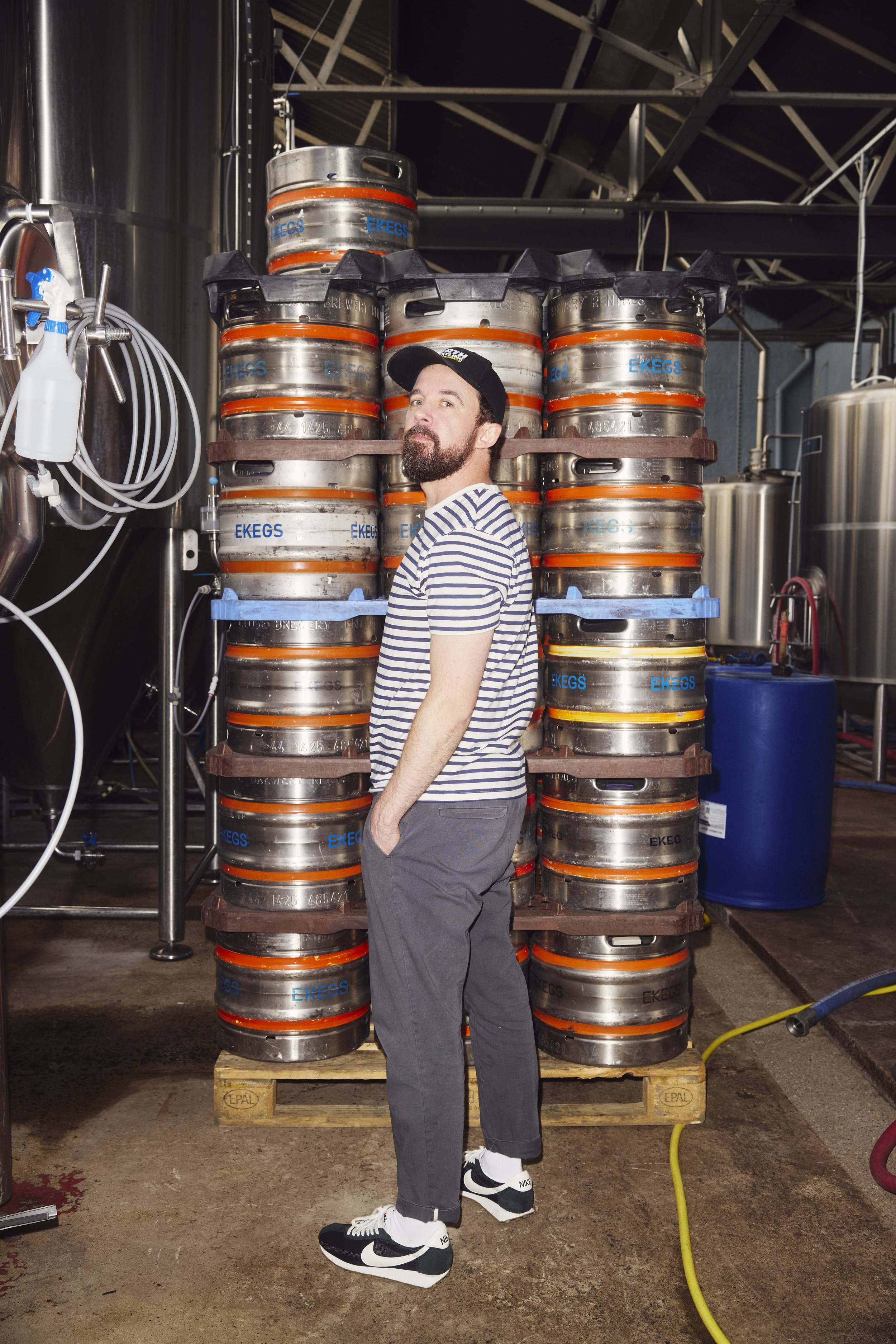
“I was like, I'm in. We're doing this. There's definitely an audience here for an adult-oriented wrestling show in Newcastle. So it's just been 10 years of kind of hustling it into existence from there, really.”
“In 2016 I was at a bit of a creative crossroads,” he explained. “I wanted to do a different project, something new. I remember sitting with my wife and we were literally writing down what we could do. And I wrote “wrestling show” because it was something I was always interested in.”
Despite initial apprehension from Andrew’s wife – “rightfully so!” Andrew admits – things snowballed from there. He started going to local shows around Newcastle and trying to meet people, but soon realised that the wrestling scene was quite closed off to newcomers. So he decided to run his own show at the Riverside in Newcastle, emailing wrestlers he'd seen locally to work out costs.
“We’d booked a really well-known wrestler who cancelled 24 hours beforehand. He was like our main draw for it. And it still went well. We got about 150 people through the door for that one. I was really encouraged.”
His next show dropped to around 80 people, but he was committed: “By that point, I was like, I'm in. We're doing this. There's definitely an audience here for an adult-oriented wrestling show in Newcastle. So it's just been 10 years of kind of hustling it into existence from there, really.”
The hustling has paid off. NORTH Wrestling celebrated its 10th anniversary at the end of July, and has an adoring community with both familiar and new faces at every event. Its growing success didn’t escape the notice of the powers that be: a BBC producer reached out to Andrew in 2025 asking if he’d like to apply for Dragon’s Den.
“I thought, I'll just do it and see where it goes. And we just kept getting through each stage of the application process.”
After months of auditions and providing evidence of due diligence, Andrew received a filming date. He didn’t actually expect to get that far:
“I was like, shit! The whole thing was a bit of a blur. I rewrote my pitch the night before because I completely blanked in the run-through. And then the actual experience of it, I only really remember through watching it.”
Ultimately, the Dragons chose not to invest. I asked Andrew how he took the rejection: “I'm sure a lot of rejected people on Dragon’s Den say this, but I was absolutely fine with it,” he laughs. “I genuinely didn't go in thinking, oh, they're going to invest in a wrestling show. I just thought, well, we've had this opportunity to put our show on BBC One, prime time. I'd be a bad promoter if I didn't follow through! And I didn’t make a tit of myself on telly, so that’s enough.”
The coverage made NORTH Wrestling known to a wider audience and more people are buying tickets for shows. This increased popularity is exactly what Andrew wanted, but it isn’t easy, especially as NORTH Wrestling is only one of his three jobs. He’s a freelance Creative Designer and the Event Manager for Anarchy Brew Co too.
I asked him how he copes.
“With great difficulty to be honest! It's like spinning plates and sometimes you've just got to let one go. But I've got a great team of people behind me. And working here, at Anarchy Brewery, lets me do this job and NORTH Wrestling in tandem.”
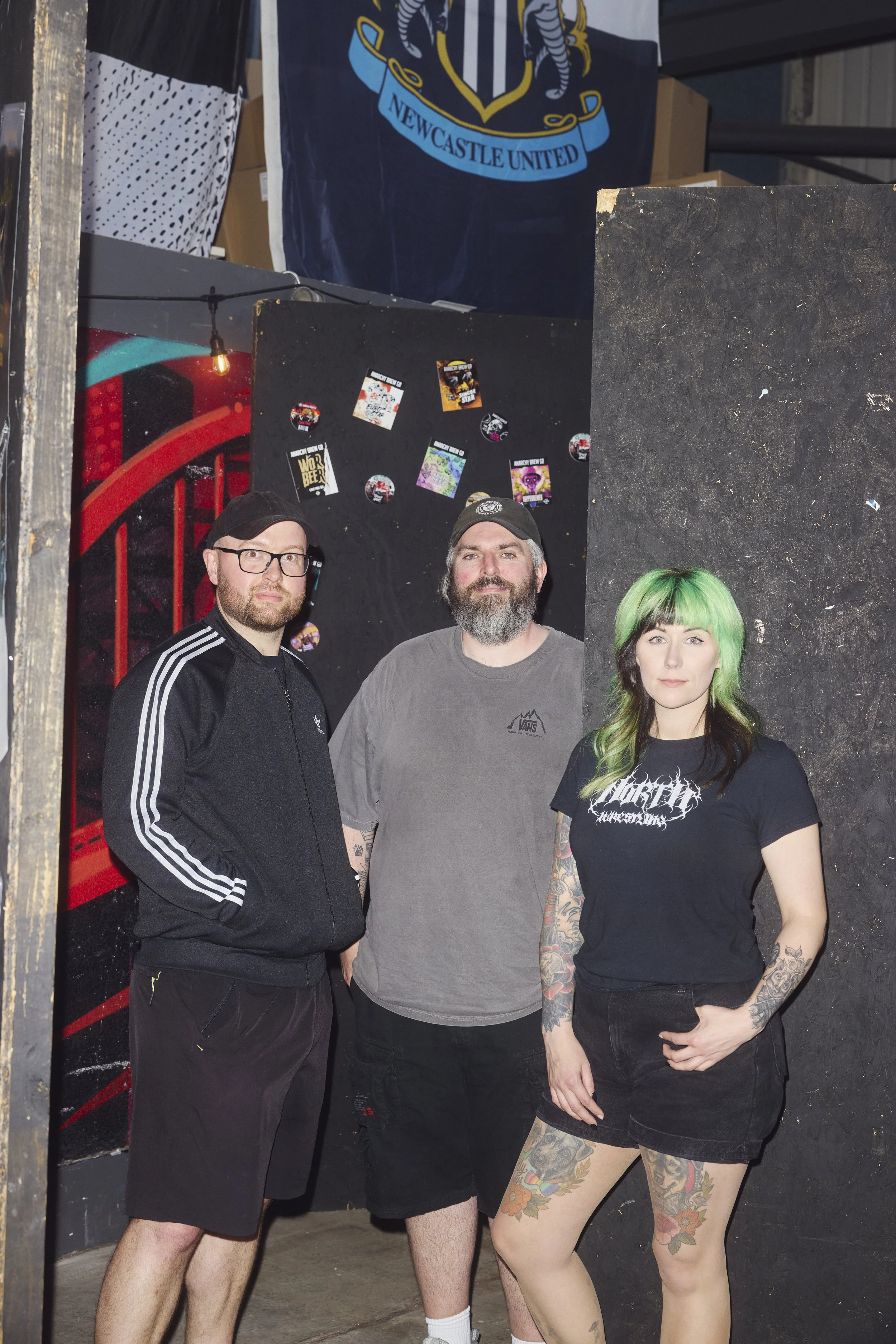
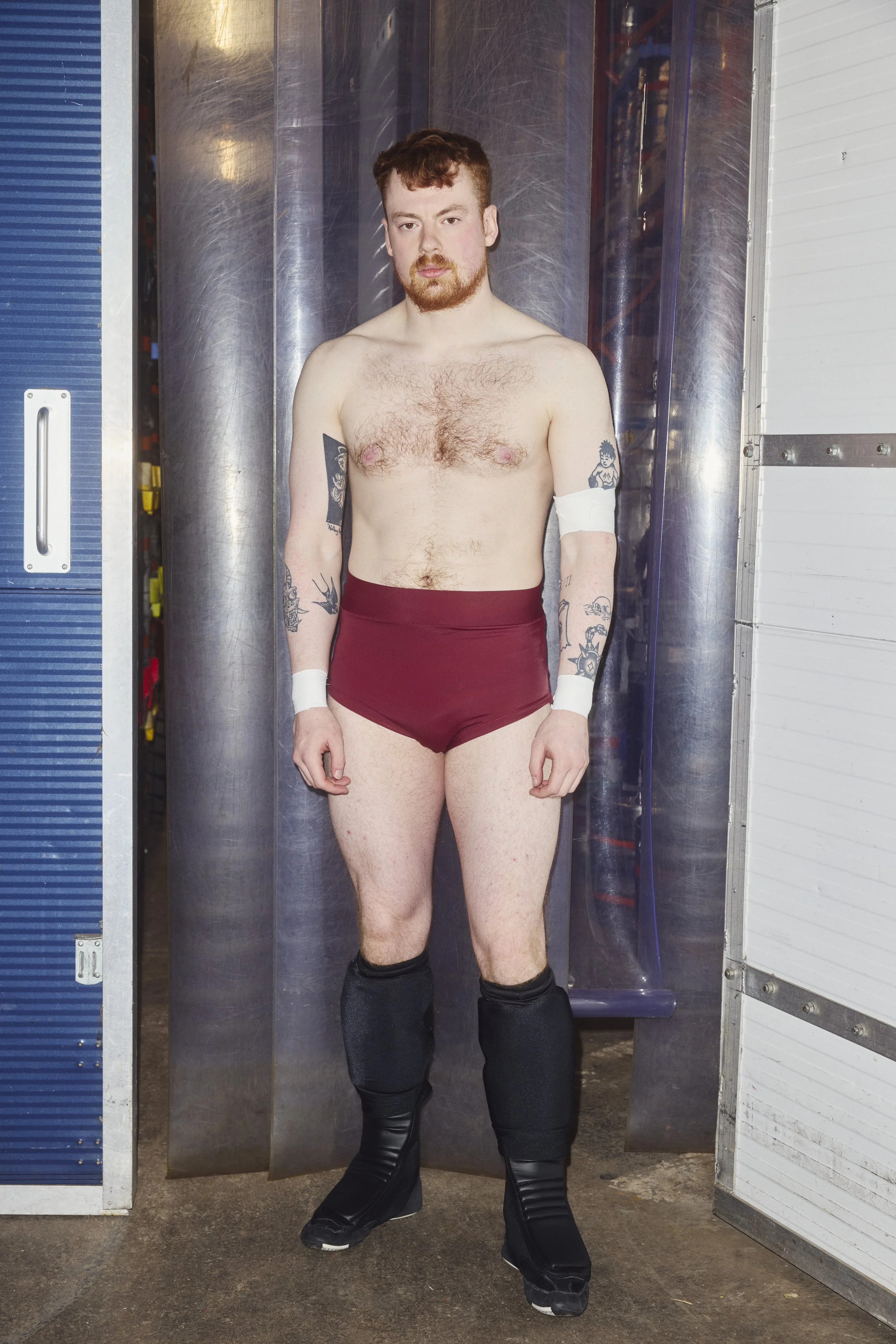
The great team Andrew mentions were busy at work as we spoke. I managed to grab three of the multi-talented producers for a quick chat: Kirsten Thorpe, the videographer who can be seen wielding a camera at ringside during shows; Rory Coyle, pro wrestler and one of the commentators; and Alex Ayre, another videographer and creator of promotional content.
There’s clearly a lot going on behind the scenes of NORTH Wrestling, so I asked them about it.
“You start a long time before the show,” Kirsten began. “We're not just thinking about THIS show, it's what story do we wanna tell in the long term? It generally starts with brainstorming who we want to use in those positions and who we think is gonna have the availability to do it.”
With wrestlers travelling from all areas of the UK, there can be issues. “It involves a lot of troubleshooting problems that you can never foresee,” Kirsten continued. “Horrible travel days. Torrential downfalls. Where people get stuck and you're thinking: ‘We have three matches that are affected – how do we fix this?’.”
Around the logistics of each show, you have the matches themselves. There are typically five to six of these per night, along with a pre-show fight to get the crowd going. These matches add extra layers of complexity, from choreography to camera work.
“We encourage the wrestlers to find the camera crew and be like, ‘hey, I'm gonna do this cool thing. Can you make sure you get it?’” Rory explained. “It's just a weird mixing pot of a bunch of different disciplines, having to work together to make the best possible thing.”
Kirsten added: “My usual question to wrestlers is, ‘do you have a dive?’. If you have a dive out of the ring towards the crowd, we need to let the yellow shirts [security marshalls] know for everyone’s safety. I’ve been doing this for ten years now and I’ve developed an intuition about what the next move will be, which helps a lot!”
For Alex (who coincidentally also does videography for balletLorent, featured on Pattern in October 2025), his role involves thinking ahead to how his promotional content will work after the show:
“When I’m taking footage, I’ll be thinking about what we can turn into promos, but also capturing character pieces and backstage interviews. I want to have bits of emotion and subtleties like that, rather than just lots of action shots. I’ll edit those clips together and release them depending on what storylines we want going into the next show.”
“It's just a weird mixing pot of a bunch of different disciplines, having to work together to make the best possible thing.”
“I love to travel and meet people, being part of this insane niche of a niche. I absolutely adore it.”
Watching the wrestlers in the ring, you’d be forgiven for thinking they’d had hours – days even – to practice their routines and dialogues. For NORTH wrestlers, the reality is very different.
Andrew told me: “One of the amazing things that people don't realize is that the actual matches are put together about an hour before the show. They might not have ever met each other. So it’s just unbelievable really – that level of physical ability, being able to manipulate your own body and somebody else's.”
This certainly adds a unique buzz to NORTH Wrestling. The events themselves feel organised, yet there’s a feeling of anticipation in the air. Rory summed up that feeling nicely:
“I like it when it feels a little bit off the rails, a little bit spontaneous, a little bit more real. It's treading that fine line between making sure we capture everything so it's really entertaining, but then having those bits where we blur the lines and people go, ‘wait a minute, that felt a bit chaotic’... which I was very guilty of!”
I’m in awe of how skilled the performers have to be in terms of strength, agility, teamwork and memory. I mentioned this to Andrew, who agreed.
“Collaboration is the most important thing. And then engaging with the audience as well. And then nowadays you've got to sell yourself as a brand. You've got to be a salesperson at the merch tables. It's a skillset that gets buried underneath people’s idea of what wrestling is.”
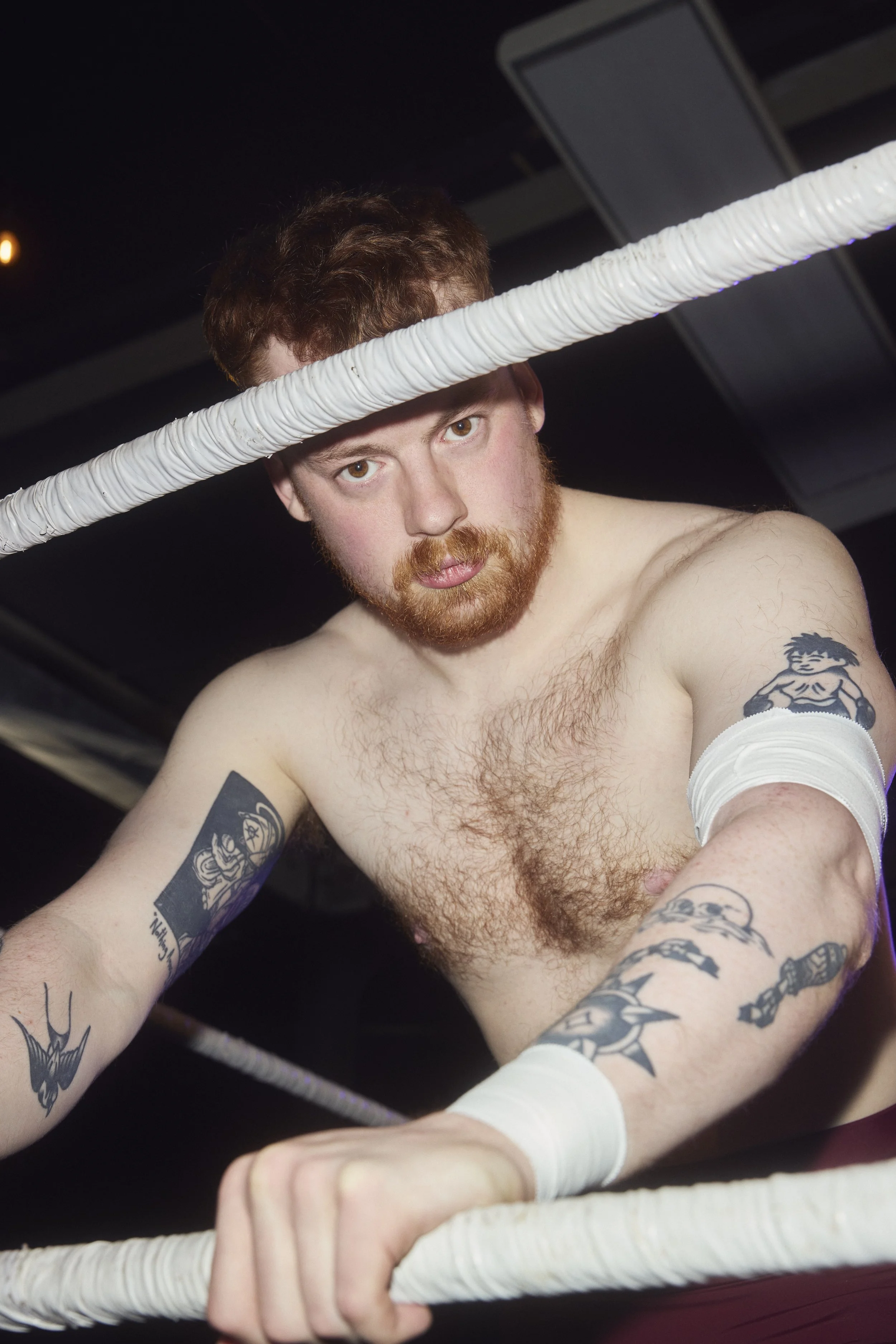
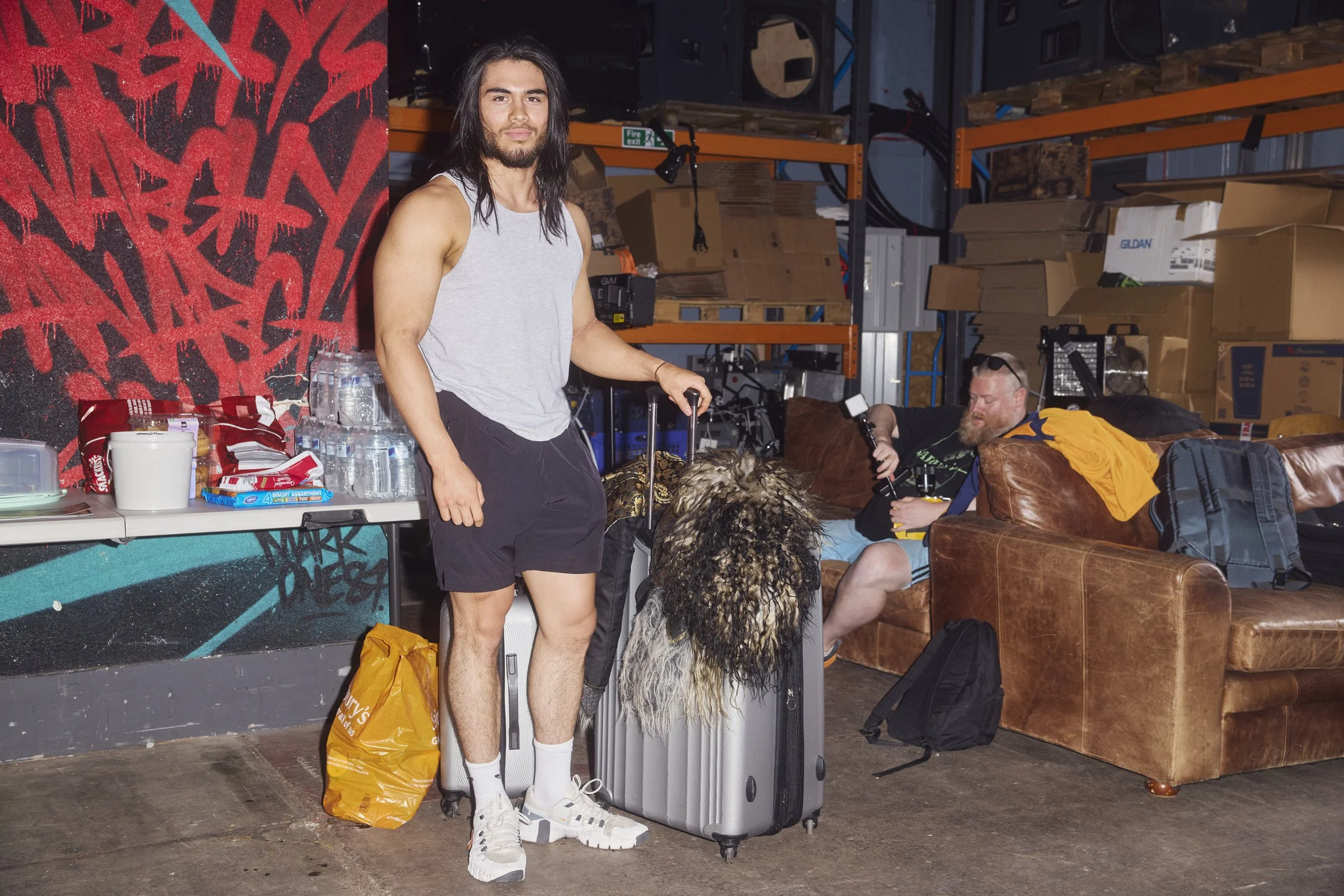
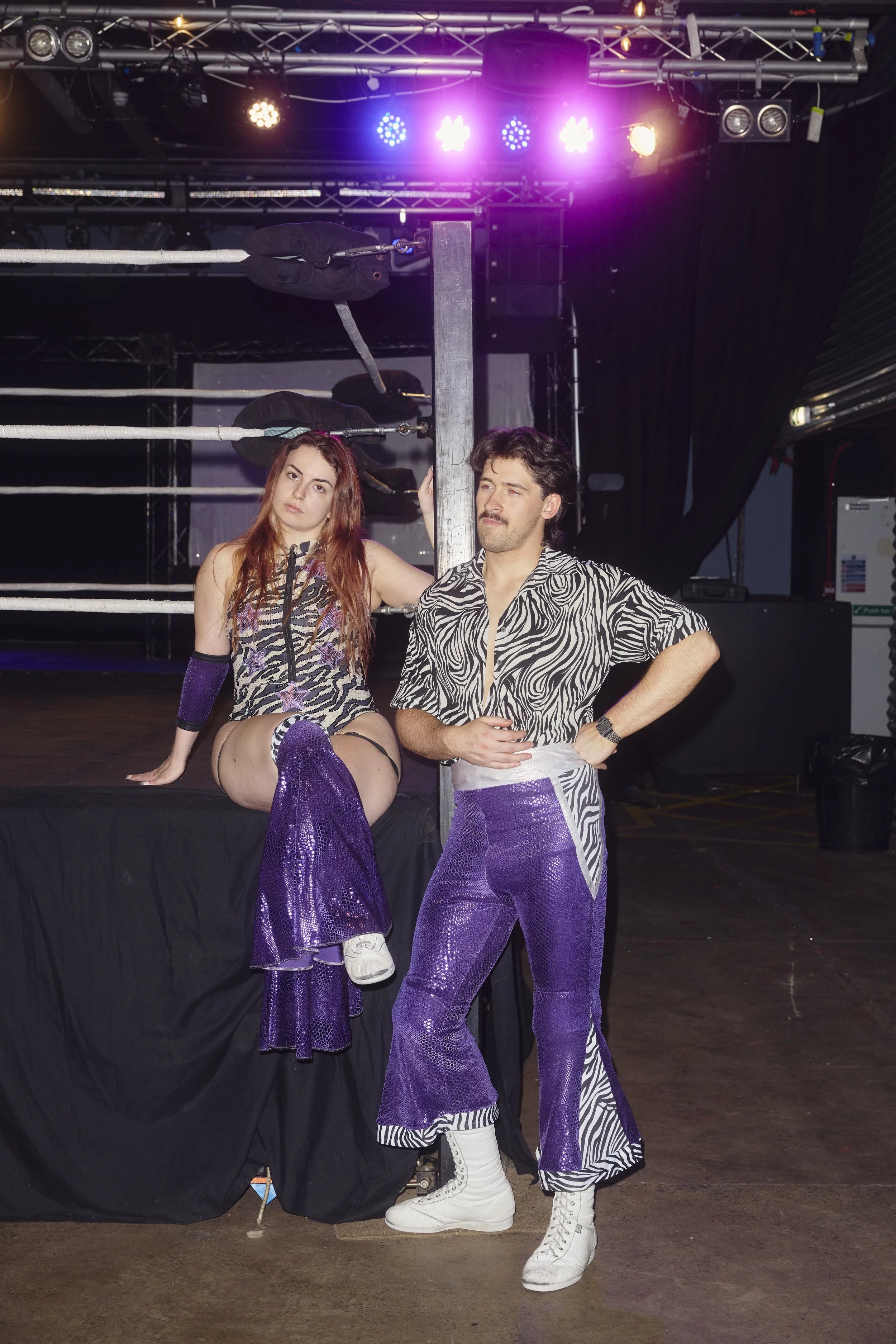
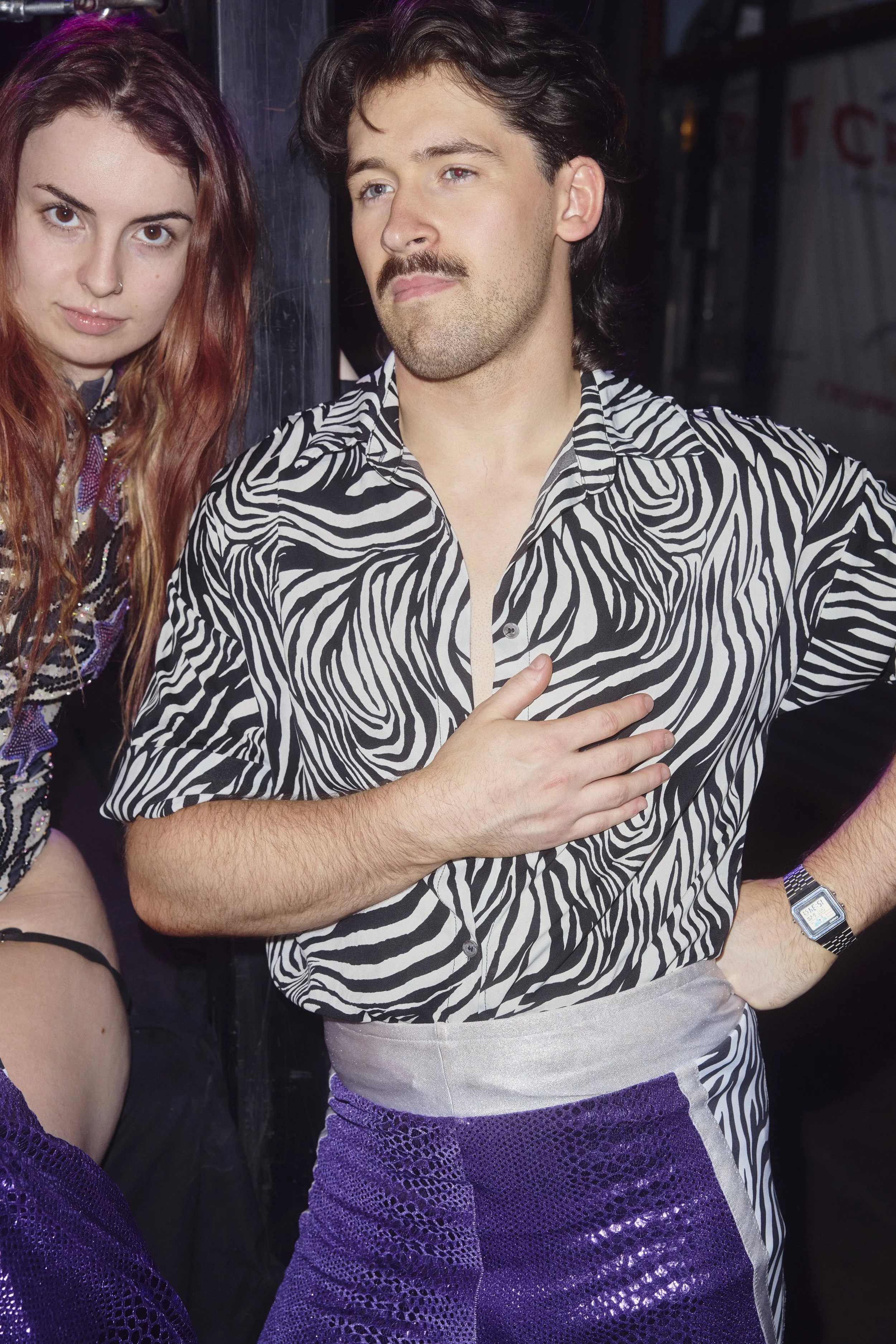
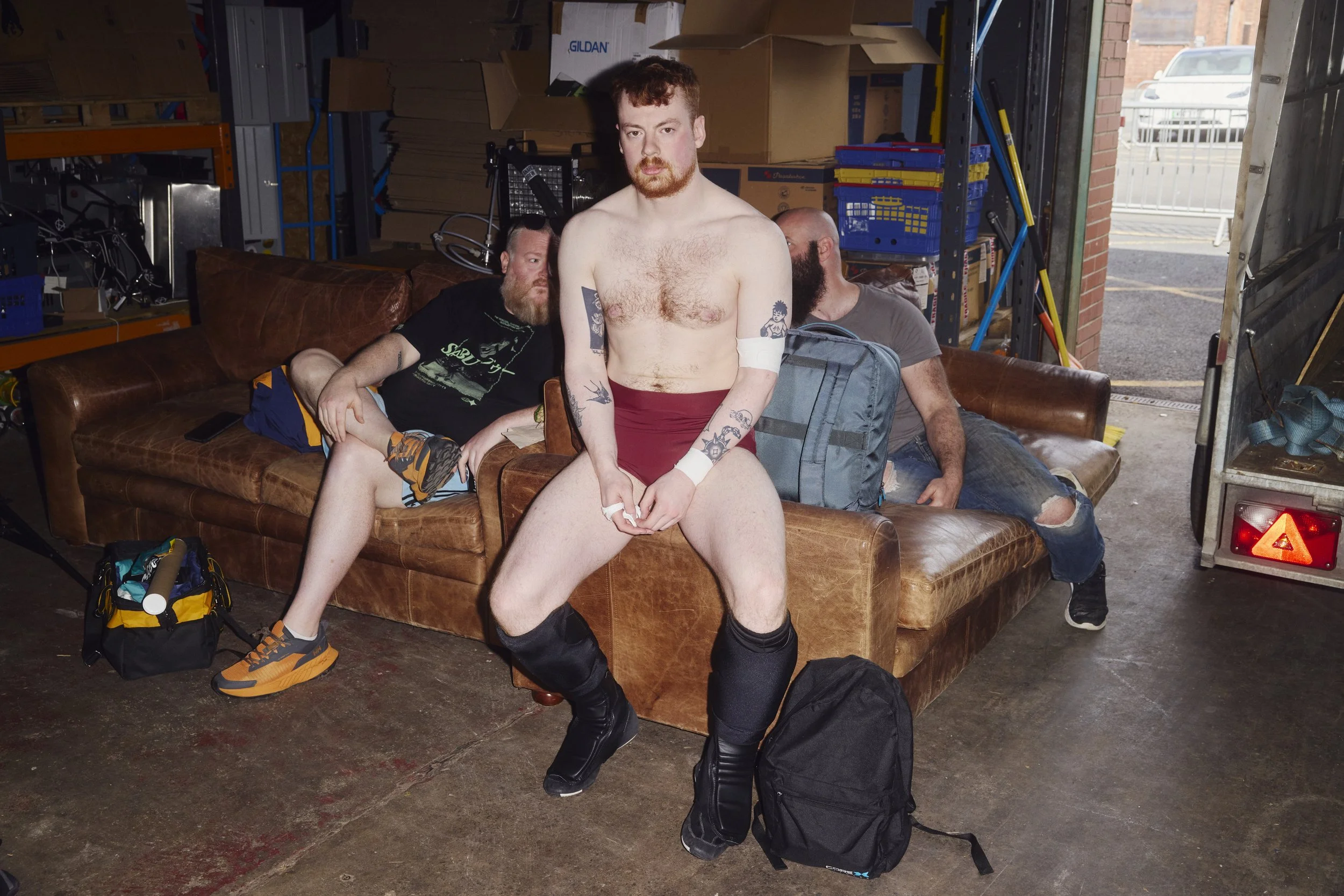
I wanted to dig into this with two of NORTH’s favourite wrestlers: Gosforth-born Henry Faust – NORTH’s local boy – and Daz Black (“far too handsome”, Rory once commented). Both shed light on just how much work and time goes into honing yourself as a pro wrestler.
Now in his mid-twenties, Daz has been wrestling since his early teens and it’s taken years of hard work to get to where he is today.
“When I was 16, I got so uncomfortable having to remember a full match with all the people watching,” he admitted. “It’s so much all at once. It took a few years to get used to it. Now it’s 100% easier. You know how to do all of the moves safely, and you’re strong enough.”
Henry didn’t get into training until his late teens, but he’s always had the fighting spirit.
“I did martial arts because I thought that was the way into wrestling when I was much younger. I did taekwondo, and I got black belt in that. I did Muay Thai and a lot of grappling. But I never actually got into training until I was at uni. I went to an independent show and I remember a brain cog turning and I was like, ‘right, okay, time to find somewhere to train locally.’ That was ten years ago now.”
Like most wrestlers, Henry is willing to throw everything at his career, which is evident from what he told me next: “I work a full-time job alongside this. It’s like: go to work from half eight until half four. Get home, drop my stuff off, go straight to the gym. I'm in the gym three or four times a week. Wrestling can be quiet, or very, very busy. Two weeks ago, I had three shows across two days. One in South Shields, one in York, and one in Derby. And then went to work the next day.”
Something that kept cropping up during our interview was the community, fans and the people they meet along the way. It makes all the effort worth it.
“The atmosphere is just electric every single time,” Daz said. “I absolutely love it. And the fans are just so friendly. When they come and meet me at the merch table they're genuinely just nice people who want you to do well.”
Henry echoed this: “There are times you do something in a match where the crowd just erupts for it and you go, ‘I've absolutely got you’. When you start feeling like things are clicking, that's what I love the most about it. I love to travel and meet people, being part of this insane niche of a niche. I absolutely adore it.”
“It’s the Wild West! It doesn't fit into the other arts and culture bubble in that there's not as much funding or support that goes into it. I picked this wrestling show because it's in my home city and I'm passionate about making it thrive here.”
The sense of community is very much tangible at NORTH Wrestling shows, and one thing that strikes me is how inclusive they feel. I asked Andrew how he tries to make his events as welcoming as possible.
“I'd be remiss not to mention the Speaking Out movement in pro wrestling in 2020, much like the Me Too movement,” he says. “It really did open our eyes to the idea that maybe wrestling wasn't really built for an inclusive audience, or at the very least it wasn't paying enough respect to that. Accessibility is a big one for us – we sell accessible tickets, we have free carer tickets – but representation on our show is equally important. Make sure you book the best people, and you will, by virtue, have a diverse roster.”
Something Andrew wants to achieve through NORTH is to change people’s perceptions of wrestling – that it’s very macho and just a bit silly.
“It's a performance! It IS silly! Of course it is. It's a really ridiculous meta-concept and it shows you how far humanity's come that we're doing this. It's mental that society's moved to this point. I see it as a sandbox for conflict. It's like bad versus good. See which way it goes. See how you feel at the end of it.”
As for the machoism, Andrew is very keen to spotlight the characters, the storytelling and emotions too, not just the physical fight. For Rory, this was one of the main draws to NORTH Wrestling:
“It was the first place to really adopt me as a wrestler, but also let me be creative. It was very much my style. The matches are amazing but it puts stories and characters above other aspects. That's the type of pro wrestling I love.”
The unique world of wrestling, and the community that’s enveloped NORTH Wrestling in particular, is what makes it so special. It’s what attracts people to it and keeps them there for years to come.
“It’s the Wild West!” Alex told me with a grin. “It doesn't fit into the other arts and culture bubble in that there's not as much funding or support that goes into it. I picked this wrestling show because it's in my home city and I'm passionate about making it thrive here.”
Wryly, Rory looked over at Kirsten and said: “I’m the reason you stayed.”
Yep, the pair met on the job and later got married – perhaps NORTH’s most meaningful match to date.
“Yeah we’re kind of stuck in this!” Kirsten laughed. “But on a serious note, the whole team has a connection with each other even backstage. We all have conversations outside, we all have interests that overlap. We just enjoy being around each other. That’s what keeps us going.”
Henry exudes endless passion for his wrestling family (he could fill a whole feature of his own!). But to sum it up:
“People give a shit about NORTH. They wanna see it succeed. I mean, Alex on camera, he's one of the most creative people I've ever met. Andrew Bowers has this drive and belief in himself and in the product, and then you get Kirsten, who just does incredible camera work as well. I really can't say enough good things about it. I love NORTH with all of my heart. I truly mean that. I couldn't say it any more.”
Andrew hopes to expand NORTH Wrestling into other parts of the UK in the future, although minimal profit margins make this difficult. For now, he’d like to hold more regular, bigger shows, like THUNDERSTRUCK – their family-friendly, but “raucous”, event at Walker Dome in October.
“We're just going to keep going. Keep getting our heads down and providing pro-wrestling entertainment for Newcastle for the time being.”
Finally, I asked Andrew what he’d say to anyone who is intrigued by NORTH Wrestling but perhaps a little hesitant about coming along to an event.
“There isn't really a bigger curiosity show happening in Newcastle! I’ve spoken to people who've been dragged along to NORTH events and now I see them at every show. It’s essentially a live action fight scene with soap opera, comedy, a bit of drag. If you’re curious, just give it a go.”
Learn More
If you are curious, tickets for THUNDERSTRUCK on 24th October are available on the
Connect